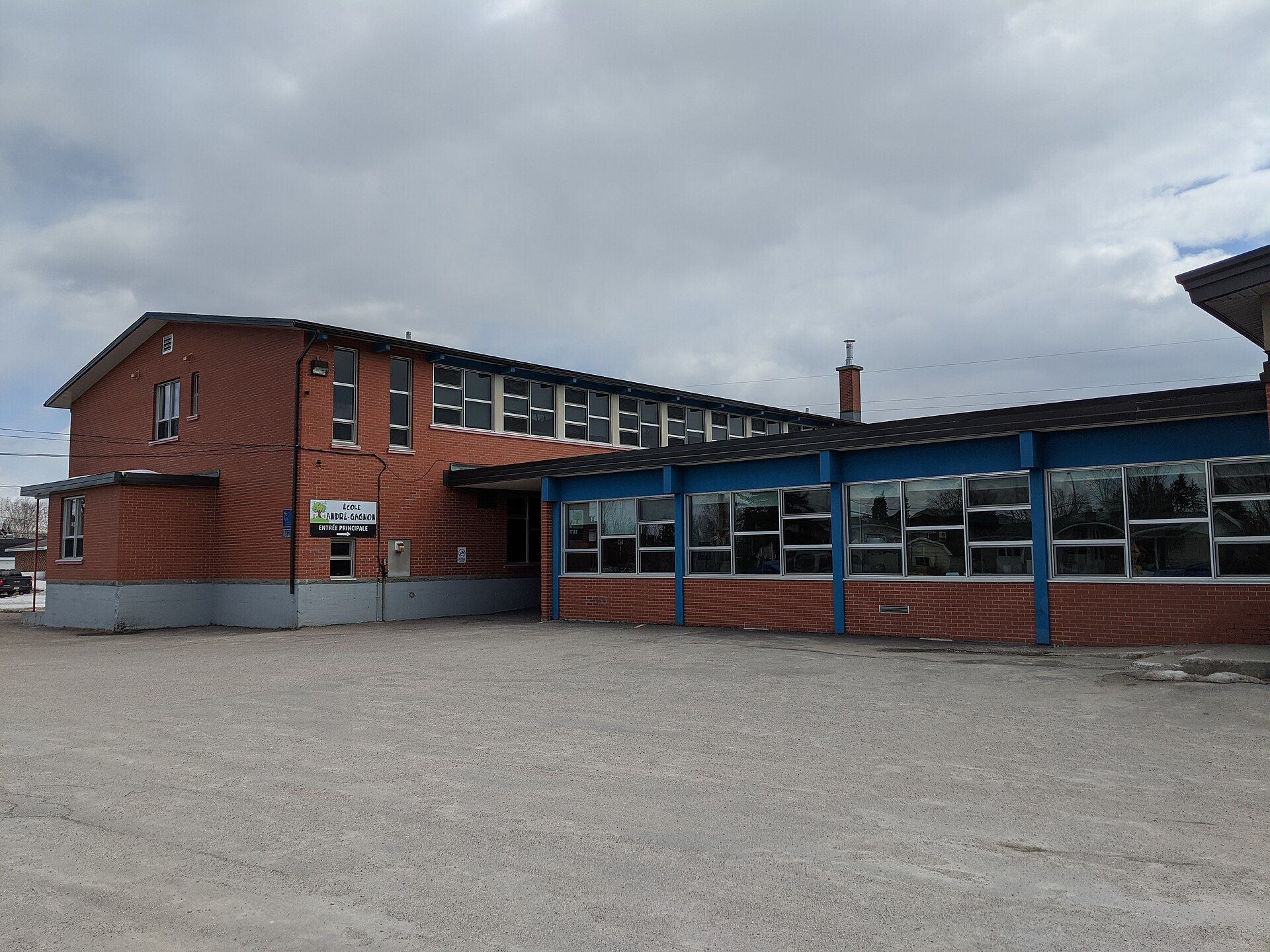
Health Canada’s Guide for Radon Measurements in Public Buildings sets out how to test schools, day cares, care homes and other public buildings. No Canada-wide law requires schools or child care to test. Rules differ by province and territory, and they can change. See the radon rules for schools and child care in each jurisdiction.
Health Canada’s public buildings guide covers schools, day cares, hospitals and care homes
Health Canada’s public buildings guide, dated November 2021, covers workplaces, schools, day cares, hospitals, care facilities and correctional centres. It also covers multi-unit residential buildings. For apartments and condominiums, see how radon is handled in rentals and condos.
Health Canada’s guideline of 200 Bq/m³ applies to any part of a public building where people spend more than four hours a day. That includes long-term care residences. The guide says that radon risk builds with total exposure over time. Keeping radon low in schools and day cares therefore lowers the lifetime lung cancer risk of the children in them. See what radon means for children at home.
Test every occupied room on the lowest floor, not one spot
The guide asks for a test in each occupied room in the basement, or on the ground floor or lowest occupied floor where there is no basement. An occupied room is one where someone spends more than four hours a day. The guide also includes every room whose floor or walls touch the ground or a crawl space.
Under the guide:
- one detector in a room under 200 m², and one per 200 m² in a larger room
- at least three months in the heating season
- not bathrooms, kitchens, storage areas or indoor parking
The guide notes that levels in a building can change two to three times over a single day, which is why it uses a long test. See what a certified measurement professional does.
In much of Canada, only a handful of schools have been tested
CAREX Canada tracks school radon testing across the country. It reports that in much of Canada, only a handful of schools have ever been tested. Health Canada documents testing programs across the provinces, but those programs are not legal requirements.
Four separate questions decide what applies to a building:
- federal guidance
- provincial or territorial requirements
- school board policy
- child care licensing
The Canadian Partnership for Children’s Health and Environment publishes material for child care operators. It includes a fact sheet, a testing notice for families, and sample letters for results below or above the guideline. Its 2018 policy review is analysis, not a statement of current law. See every jurisdiction’s rules.
A health authority can make childcare testing a licence condition
In 2017, British Columbia’s Interior Health Authority ordered child care facilities in its region to test for radon. It used its licensing powers under the Community Care and Assisted Living Act. This is a regional licensing measure, not a province-wide law.
Alberta’s Radon Awareness and Testing Act (2017) would require a radon test from within the past year before a child care licence is issued or renewed. It would also require a reduction plan if levels are too high. The Act has never been proclaimed, so it is not in force. See which jurisdictions have child care radon rules.
Retest after mitigation and on a fixed schedule
Health Canada’s public buildings guide says to retest after mitigation, after major renovations and every five years. It also sets how soon to act on a high result, and the time it gives depends on the level.
Public building action timing
Time Health Canada's public buildings guide gives to reduce radon between 200 and 600 Bq/m³; above 600 Bq/m³, it is within 1 year. Homes follow a different, one-year timeline.
- Date
- 2021-11-01
- Sample
- Not applicable
Under the guide, responsibility for the work, and its cost, rests with the building owner. For homes, Health Canada’s timeline is within one year above 200 Bq/m³, sooner the higher the level. See how a building’s radon is reduced.