Radon is a radioactive gas you cannot see, smell or taste. It forms underground when uranium in rock and soil breaks down. Health Canada names radon the number one cause of lung cancer in people who do not smoke. Read how much radon raises the risk of lung cancer.
Radon builds up indoors, and some homes collect more of it than others. Health Canada’s guideline is 200 Bq/m³, the average annual level at which it recommends corrective action. Find out what 200 Bq/m³ means for your home and how soon to act.
Radon is a radioactive gas from uranium breaking down in soil and rock
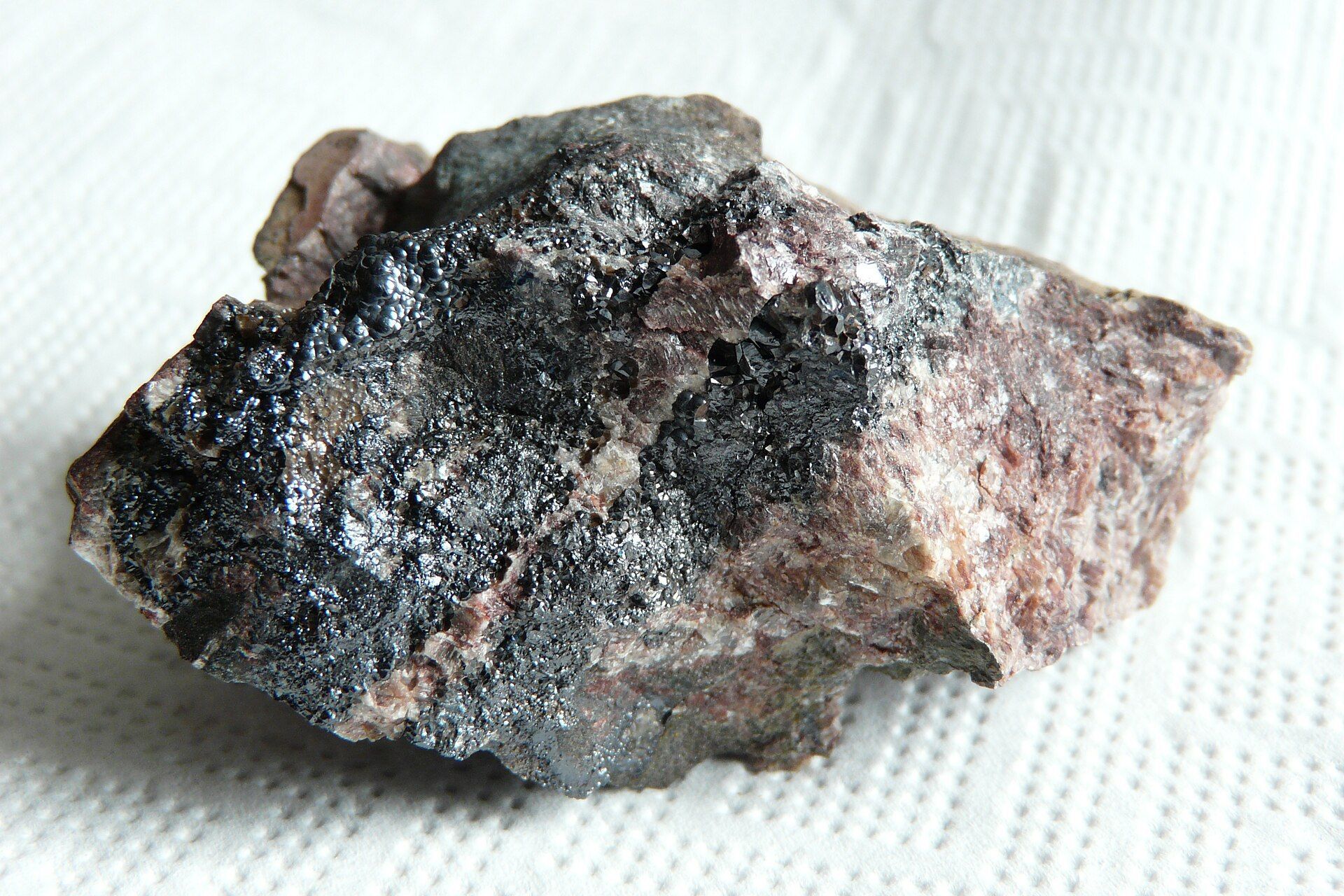
Uranium in rock and soil breaks down over time through radioactive decay. One of the things it turns into is radium, a solid radioactive metal. Radium-226 then breaks down into radon-222, which is a gas. The rock and the radium stay where they are, while the gas mixes with other soil gases and moves toward the surface.
Half-life of radon
Half-life of radon-222: about how long it takes for half of any amount to decay into solid radon decay products. Radon that enters a building is short-lived, and its decay products are what stay in the air.
- Date
- 2026-09-18
- Sample
- Not applicable
Radon is a noble gas, so it does not readily react with other substances, including minerals or water. That lets it separate from the rock that made it and move quickly through soil. Being unreactive does not make it harmless, because it stays radioactive.
Within days, radon breaks down into a chain of solid radioactive products, beginning with polonium and ending in stable lead. Look up becquerel, decay products and soil gas in the glossary.
Radon gets in wherever the house touches the ground
Soil gas carrying radon reaches the surface everywhere. Outdoors, it is diluted quickly in the atmosphere. A building in direct contact with the ground gives the gas a way in. Inside, dilution is limited, so high levels can build up. Health Canada lists these entry points:
- Cracks in foundation walls and floor slabs
- Construction joints
- Gaps around service pipes and support posts
- Floor drains and sumps
- Cavities inside walls
- Water supplies
Levels are generally highest in basements and crawl spaces, which are nearest the source and usually poorly ventilated. The 2024 Cross-Canada Radon Survey says: “even though radon is naturally made, the high levels we see indoors are a human made problem”. Health Canada says sealing the entry points is not an effective stand-alone way to reduce radon. See how a mitigation system deals with these entry points.
Lower air pressure indoors draws radon in from the soil
Warm air rises through a house and leaves through the upper floors. As it goes, the lower levels end up at lower air pressure than the ground and the air outside. That pressure difference pulls air in from the soil, and radon comes with it. The effect is generally stronger during the heating season, which is why a radon test runs through it. Read how to test, and why the heating season matters.
Homes with a basement and homes on well water tend to have more radon
The 2024 survey compared radon by the floor where the test was placed. Lower floors average more.
Radon by floor level
Geometric mean radon levels below ground, at ground level and above ground, by the floor where the test was placed, in the 2024 Cross-Canada Radon Survey: 23.5% higher below ground than at ground level, and 20.9% higher at ground level than above. A population average, not a rule for any one home.
- Date
- 2024-10-01
- Sample
- Not applicable
Below ground reads highest on average, then ground level, then the floors above. Upper floors are lower on average, and they are not radon free. The survey’s authors suggest upward air movement in the house, and dilution from windows and doors, as the most likely reason.
Rural communities on groundwater wells have more radon in their properties than nearby urban communities. In the survey, rural means a community of 1 to 29,999 people. The authors suggest gaps around well casings may let radon move more easily toward the soil under the house. A standard mitigation system still works in these homes. The survey suggests no action on the well itself at this time.
Radon in drinking water
Health Canada's position on radon in drinking water: the larger risk is radon in indoor air. Water adds a little when the gas escapes during showers and household use, and very high levels in private well water can occasionally matter. Testing the air captures radon from every source.
- Date
- 2026-09-18
- Sample
- Not applicable
Test the indoor air first, since an air test captures radon from every source, water included. Find out which level and room to test in your home.
Single-detached and rural homes are more likely to be above the guideline
Three factors set a building’s radon level: region, community and building design. Radon rises through the ground at a rate set by local geology, and every Canadian region has some radon-generating source material. Design, construction and ventilation matter too, and the survey reports a trend toward higher radon in newer Canadian homes. Read the geology behind the regional differences.
In the survey, a single-detached house is more likely than a semi-detached house to be at or above the guideline. A semi-detached house is more likely than a row house. The multifamily figure is preliminary.
Rural homes, in the survey’s sense, also average more radon than urban ones, and a larger share are at or above the guideline.
Households that had tested
Share of households outside apartment buildings that had heard of radon and had ever tested for it, in 2021; 56% of households had heard of radon. A 2021 figure, not a current rate.
- Date
- 2022-10-18
- Sample
- Households and the Environment Survey, 2021
In 2021, most households that had heard of radon had never tested. See how common high levels are by province and place.