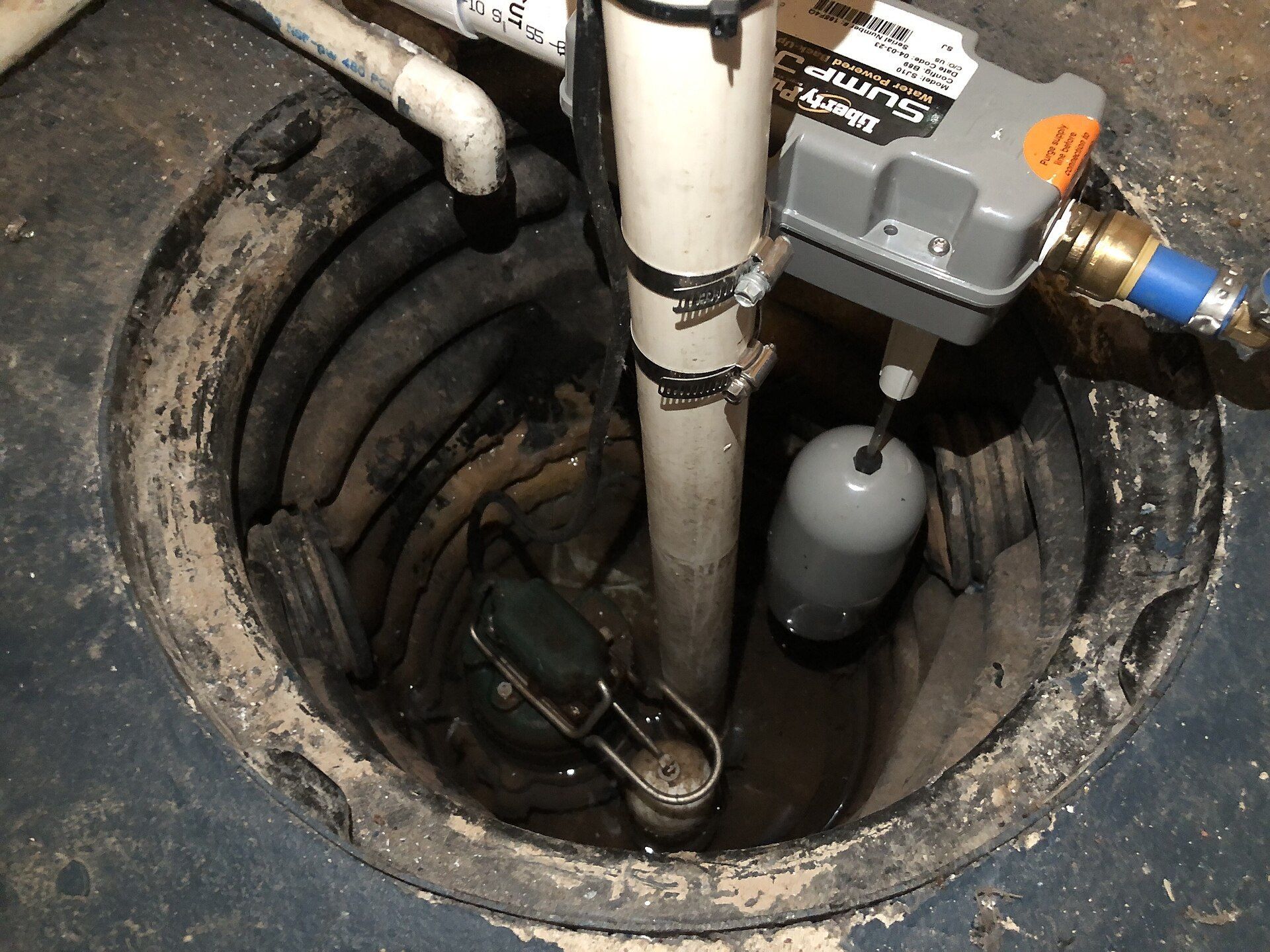
The label on a radon system tells you, or the next owner, what the system is and who installed it. It also says when it went in and what the fan’s suction pressure was at start-up. C-NRPP publishes the labels and developed them in accordance with the CGSB standards. See how the system the label describes works.
The system label names the installer, their C-NRPP number and the installation date
An active system’s Level 3 label records the installer’s name and contact, their C-NRPP number and the installation date. It also records the suction pressure, in pascals or inches of water column. A Level 1 rough-in label carries the C-NRPP number, the installer’s name and the date of installation. A separate Level 1 label goes on the electrical box for a future fan.
The C-NRPP number lets you trace who did the work. C-NRPP’s Certification Check verifies whether the installer is certified. Find out how to check an installer’s certification.
The active-system label says the fan stays on and when to retest
The Level 3 label says the fan must remain on at all times. It says to check the pressure gauge periodically. It says to retest every 5 years, or after changes to heating, cooling or ventilation, or after renovations.
A Level 1 label marks a rough-in that is not operational. It says the pipe must not be opened and the cap stays sealed until the system is converted and discharged outside. It says to test during the first winter after the home is first lived in, with a long-term test of 90 days or more. It says to retest every 5 years. To activate it, contact a C-NRPP Mitigation Professional. Check whether your home is due for a new test.
The label records the start-up suction pressure, and the gauge does not measure radon
The pressure gauge on an active system is a U-tube manometer. It measures the system’s pressure, not radon. A reading in its normal range means the fan is working. It does not mean your radon level is acceptable, and only a test shows that.
The Level 3 label records the suction pressure when the system was installed. That gives you a record of what the system read when it was new. If readings leave the normal range, the label says to call a C-NRPP Mitigation Professional. Read the questions people ask about the fan and gauge.
The level on the label tells you which kind of system you have
CAN/CGSB-149.11-2024 sets out two levels for new buildings. Level 1 is a radon rough-in. Level 2 is a passive vertical radon stack. It is a vertical pipe from the finished floor of the lowest level to the outside, through the roof or gable end above the roof line. Active soil depressurization, still called Level 3, sits in CAN/CGSB-149.12-2024 for existing buildings, and installers and C-NRPP’s labels keep the level names.
Radon control levels
Levels of radon control in CAN/CGSB-149.11-2024, Radon control options for new buildings: Level 1, a radon rough-in, and Level 2, a passive vertical radon stack. Active soil depressurization, still called Level 3, now sits in CAN/CGSB-149.12-2024 for existing buildings.
- Date
- 2024-06-01
- Sample
- Not applicable
Both standards come from the Canadian General Standards Board (CGSB). The National Building Code of Canada 2025 is a model code, and it is not law where you live until your province or territory adopts it, often with changes. See how rough-ins and building codes work in new homes.
C-NRPP recommends bilingual labels, and pipe marking is a separate thing
C-NRPP recommends bilingual labelling, which takes two physical labels. The labels are free for C-NRPP professionals and building officials, who pay only for shipping. Some labels download as PDFs, and the Level 2 labels are order-only.
Pipe marking is separate from the system label. It identifies the radon pipe so no one mistakes it for a drain or vent. British Columbia’s code bulletin has the radon vent pipe labelled every 1.8 m and at every change of direction.
Pipe marking
Spacing at which British Columbia's building code bulletin has the radon vent pipe labelled, as well as at every change of direction. Pipe marking identifies the pipe itself and is separate from the system label.
- Date
- 2026-09-18
- Sample
- Not applicable
A house can have pipe marking and no system label, or a system label and no pipe marking. See the warning signs of poor radon work.
A label is a record, not proof the system works
A label gives you a traceable record of the system. It does not prove the system worked. Walk to the radon pipe and check for these:
- A label is on the system.
- The installer information is filled in.
- A C-NRPP number is written in.
- An installation date is written in.
- On an active system, the original suction pressure is recorded.
A missing or half-filled label is a reason to ask questions. Many systems predate the current standards. For a sale, the label, the system documentation and a post-mitigation radon test together prove more than any one alone.
Mitigation documentation
What C-NRPP says the national mitigation standard requires a professional to leave with the homeowner: the system labels, manuals for the fan and the U-tube manometer, all radon test data, the fan's estimated energy use, and a recommended inspection and retest schedule.
- Date
- 2025-03-01
- Sample
- Not applicable
Find out what a buyer can ask for.