Long-term test
91
daysMinimum length of a long-term radon test; anything shorter is a short-term test. Health Canada recommends testing for 3 to 12 months, with at least 91 days in the heating season.
- Date
- 2026-05-22
- Sample
- Not applicable
How long to test for radon, when to start, where to put the detector, what weakens a result, when to retest, and what Canadian data says about who tests.
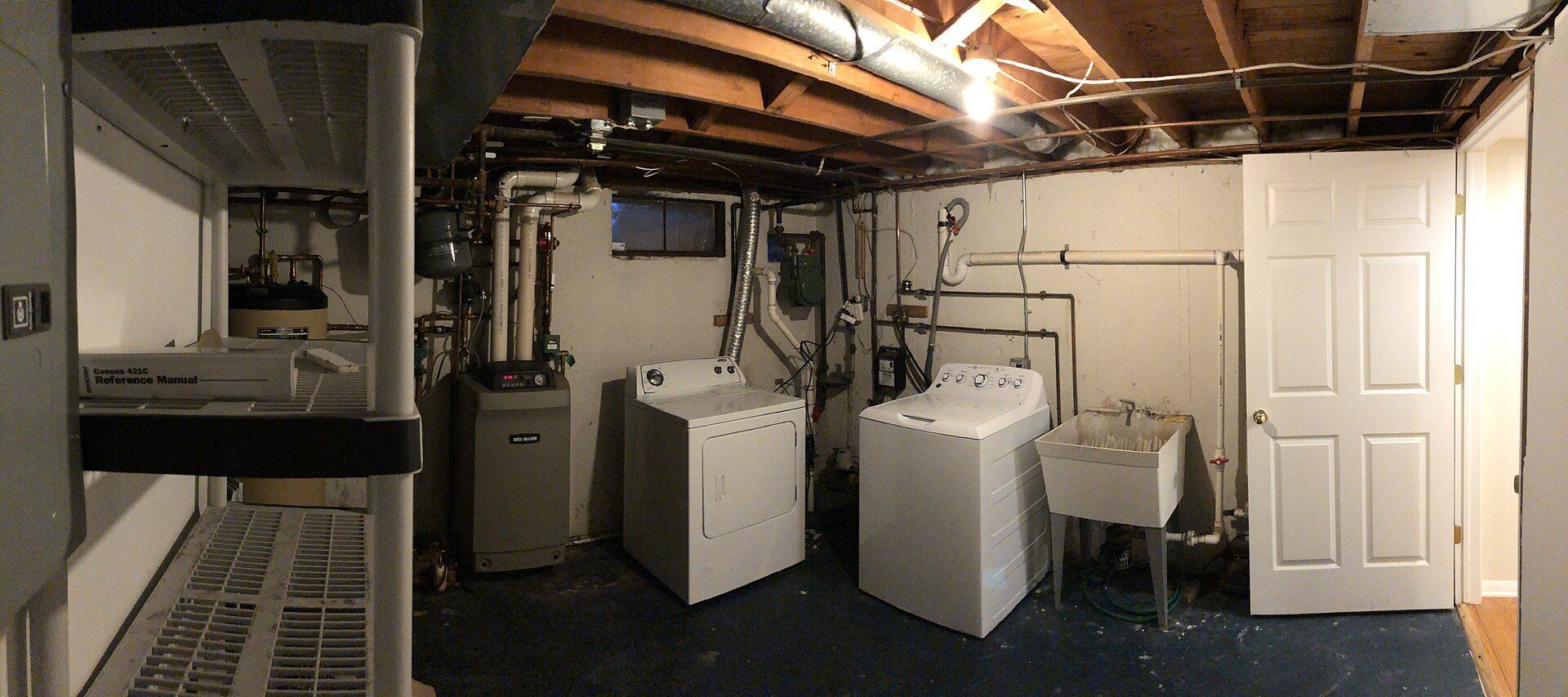
Photo: Famartin, CC BY-SA 4.0, cropped, via Wikimedia Commons.
91
daysMinimum length of a long-term radon test; anything shorter is a short-term test. Health Canada recommends testing for 3 to 12 months, with at least 91 days in the heating season.
Test for 91 days or longer, with the heating season inside the window. Health Canada recommends 3 to 12 months, with at least 91 days of that in the heating season. Put the detector on the lowest level of the home that people live on, in a room someone uses every day. Then live as you normally do, because a long-term test measures the home as it is lived in, and do not open windows for the test. Your result is compared with Health Canada’s 200 Bq/m³ guideline; see what it means and how soon to act.
Radon levels move hour to hour and season to season, so a short reading shows one moment, not the year. Health Canada’s guideline applies to the yearly average, and 91 days is the shortest test it recommends. Three to 12 months gives a better estimate of that average, and the longer the test runs, the closer it gets.
The heating season matters because of how a house behaves in the cold. Closed windows and doors and the stack effect pull more soil gas inside. A test in the colder months usually gives a conservative estimate of the yearly level, so Health Canada asks for at least 91 days of the test in that season.
Lower in summer
Early finding of Health Canada's seasonal study, which compares three-month tests in each season with a full year. As of May 2026, 397 participants had finished a year; summer tests were below the twelve-month result on average in every region, and Central Canada's summer results averaged 13% below. Health Canada says these early numbers are not to be used to adjust a result or decide when to test.
Health Canada’s seasonal study is still running. It says the early numbers are not to be used to adjust a result or to decide when to test, so the heating-season rule stands. During the test, live as you normally do, and do not open windows for it. Read the questions people ask about running a test.
You can start a long-term test in any month. A test of 91 days or more above 200 Bq/m³ counts whenever it started, and Health Canada recommends corrective action within a year, sooner as the level rises.
Retest if below 200
Health Canada's rule for a test with fewer than 91 days in the heating season: a result below 200 Bq/m³ may underestimate the annual average, so test again in the next heating season. A test of 91 days or more above 200 needs no retest before acting.
A low result from a test short on heating-season days needs a second test in the next heating season. Read the questions about a result out of season or near 200.
The detector goes in a normal occupancy area, which is a room where someone spends more than four hours a day. It goes on the lowest level of the home that people live on. If the basement is unfinished and rarely used, the main floor is the lowest lived-in level.
Test a home above ground level too, including an upper-floor apartment. Pick the level, the room and the exact spot for your home.
Where the detector sits inside the room changes the result. Health Canada’s measurement guide sets these placement rules.
Four conditions weaken a result. They are a test shorter than 91 days, a damaged or tampered device, fewer than 91 days in the heating season, and placement that strayed from the guidance.
99.5% and 97%
Quality results of the 2024 Cross-Canada Radon Survey: detectors exposed to known amounts of radon matched them 99.5% of the time, and true duplicates placed side by side agreed 97% of the time. These figures describe the survey's own testing, not every device on the market.
Repeated results may vary by up to plus or minus 25% under the CSA and ANSI standards Health Canada cites, so a result near 200 can sit on either side. Check whether your test met the conditions and what the number means.
Health Canada says a short-term reading is not appropriate for a mitigation decision, because the guideline applies to the yearly average. A spike above 200 Bq/m³ does not mean the yearly average is over 200, and a few weeks below does not prove it is under. Use the longest average you have, never less than 91 days.
One detector is enough, and there are four ways to get one.
$30 to $60
Published cost of a long-term alpha track detector with lab analysis, as stated in CMAJ in 2023. Community and public programs sometimes offer kits for less or free. A published figure, not a current price.
A professional makes sense when you need a report that meets Health Canada’s criteria: a landlord documenting a rental, a post-mitigation check, or a grant that asks for documents. A proper report holds the test dates, the result in Bq/m³ with its uncertainty, a comparison to the guideline, and any condition that weakens the test. No government or academic source publishes a price for professional testing. Get quotes from two C-NRPP certified professionals; find one in the directory. Health Canada says to test before you sell and after you buy, not during the sale; see how testing works in a home sale.
Health Canada recommends long-term devices that passed C-NRPP performance testing and favours none over another. Some consumer monitors store less than three months of data. Health Canada says to consider replacing one five years after purchase unless it has been recalibrated, and many consumer monitors cannot be. See which devices are listed and how monitors perform.
A result describes the home as it was during the test. After any of these changes, Health Canada recommends a new test in the next heating season.
2
testsHealth Canada's schedule for a newly built home: test in the first heating season after occupancy, then retest two years after the year of construction.
A home with an active soil depressurization system gets a long-term test after the system is installed, then a retest every five years. That rule is separate from the five-year replacement advice for a consumer monitor. See the tests that follow a mitigation system.
9
%Share of households outside apartment buildings that had heard of radon and had ever tested for it, in 2021; 56% of households had heard of radon. A 2021 figure, not a current rate.
Health Canada’s own figure, in its radon action guide for provinces and territories, is that more than 90% of Canadian homeowners have never tested. Find out whether your home needs a new test now.