Homes at or above the guideline
21.7
%Share of properties in Newfoundland and Labrador with radon at or above 200 Bq/m³ in the 2024 Cross-Canada Radon Survey (unweighted).
- Date
- 2024-10-01
- Sample
- unweighted
Province or territory
Radon levels in Newfoundland and Labrador homes and where they are highest, from the 2024 survey by census division, with certified providers, funding and rules, dated.
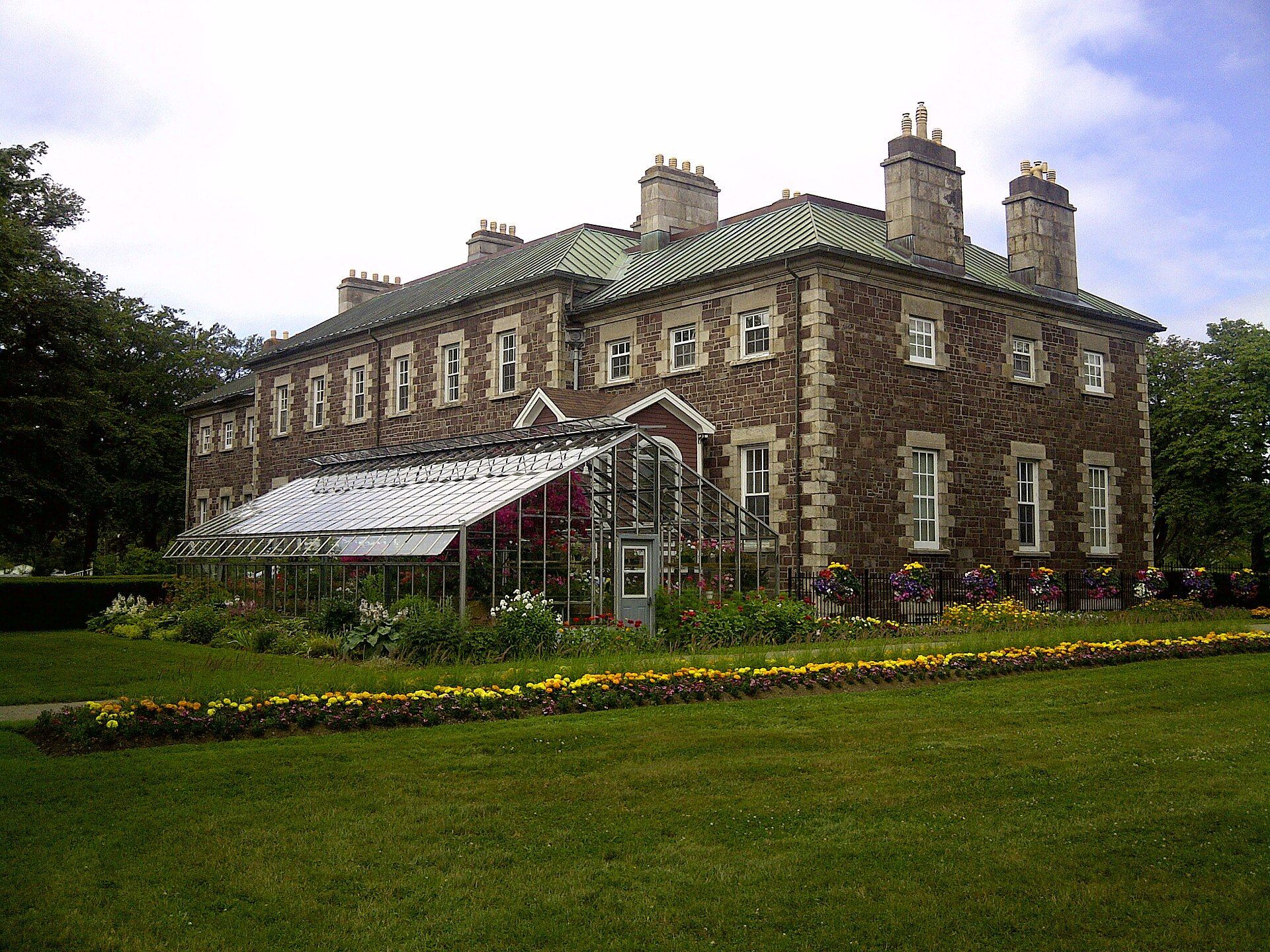
Photo: Skeezix1000, CC BY-SA 3.0, cropped, via Wikimedia Commons.
21.7
%Share of properties in Newfoundland and Labrador with radon at or above 200 Bq/m³ in the 2024 Cross-Canada Radon Survey (unweighted).
17.8
%Share of single-detached, semi-detached and row properties in Canada with radon at or above 200 Bq/m³ in the 2024 Cross-Canada Radon Survey.
1
Businesses with a business address in Newfoundland and Labrador and at least one active C-NRPP credential, as of 2026-10-18.
Share of properties at or above 200 Bq/m³ by survey reporting unit, Newfoundland and Labrador
Each census division shows the figure for its reporting unit, so every division in a pooled unit takes the pooled figure. Divisions the report lists with no data or fewer than four readings are marked.
Source: Cross-Canada Survey of Radon Exposure in the Residential Buildings of Urban and Rural Communities, 2024 Report, Version 1.1 (CCSR.24.1.1), released October 2024, ISSN 2818-8195. Cross-Canada Survey of Radon working group. Boundaries: Statistics Canada, 2021 Census census-division cartographic boundary file, adapted. Not an endorsement by Statistics Canada.
Survey reporting units in Newfoundland and Labrador, 2024 Cross-Canada Radon Survey
| Reporting unit | Readings | At or above 200 Bq/m³ (%) | Geometric mean (Bq/m³) | Highest observed (Bq/m³) |
|---|---|---|---|---|
| Division No. 1 | 52 | 9.6 | 92.9 | 2,461 |
| Division No. 10; La Haute-Côte-Nord; Manicouagan; Sept-Rivières--Caniapiscau; Minganie--Le Golfe-du-Saint-Laurent (pooled) | 64 | 6.2 | 59.8 | 684 |
| Division No. 11 (no data) | 0 | no data | no data | no data |
| Division No. 2; Division No. 3; Division No. 4; Division No. 5; Division No. 6; Division No. 7; Division No. 8; Division No. 9 (pooled) | 43 | 30.2 | 93.2 | 796 |
Cross-Canada Survey of Radon Exposure in the Residential Buildings of Urban and Rural Communities, 2024 Report, Version 1.1 (CCSR.24.1.1), released October 2024, ISSN 2818-8195. Cross-Canada Survey of Radon working group.
Grant
Up to $1,500 toward home radon mitigation. Radon is named as eligible. Current. As of 2026-09-01.
No program found
Radon is not named. Current. As of 2026-09-18.
Forgivable loan
Forgivable loan rising from $5,000 to $10,000 ($6,500 to $13,000 in Labrador); lifetime maximum rising from $12,500 to $30,000. Radon eligibility not verified. Reopening Fall 2026.. As of 2026-06-15.
Free or subsidized testing
Radon is named as eligible. Current. As of 2026-09-18.
Laws, codes and decisions on radon that apply in Newfoundland and Labrador
Each row names its instrument and status as the authority states it. Guidance is not law; a tribunal decision is not court precedent. Canada's 200 Bq/m³ guideline binds no homeowner.
| Rule type | Applies to | What it says | Instrument | Status | In effect from |
|---|---|---|---|---|---|
| Building code | Newfoundland and Labrador | Health Canada lists Newfoundland and Labrador as following the National Building Code, which carries the radon rough-in provisions. Adoption dates and local amendments differ, so the edition in force should be checked before calling any requirement current. | National Building Code of Canada, as adopted | In force | no data |
| Workers' compensation | Newfoundland and Labrador | Newfoundland and Labrador lists diseases caused by ionizing radiation. | Newfoundland and Labrador workers' compensation disease schedule | In force | no data |
| Building code | Canada (federal or national) | The radon rough-in with a capped stub was added to the National Building Code in 2010 and adopted by several provinces and territories. A rough-in is not a working mitigation system; code compliance does not guarantee a level below 200 Bq/m³, and only testing shows the actual level. Health Canada says current best practice calls for more complete systems. | National Building Code of Canada, radon rough-in provisions (2010 edition onward) | In force | 2010-01-01 |
| Professional certification | Canada (federal or national) | Canada has no licensing system for radon testers or mitigators. Health Canada recommends professionals certified through C-NRPP, but certification is voluntary, and no province has regulated radon professionals even though provinces have that power. | No licensing statute; C-NRPP certification is voluntary | No rule | no data |
| Real estate disclosure | Canada (federal or national) | High radon is treated as a latent defect by many real estate councils and associations; licensees must disclose known latent defects and help clients negotiate who pays for testing and mitigation. No province requires a radon test before a resale closes. Property disclosure statements in Nova Scotia, New Brunswick, Quebec and British Columbia include a radon line. | Latent defect disclosure duties under provincial real estate regulation | Guidance | no data |
| Guideline | Canada (federal or national) | The 200 Bq/m³ guideline is a federal health guideline, not a general legal limit for homes. For an ordinary existing home, no Canadian law requires testing, and none requires mitigation when a result exceeds 200 Bq/m³. | Government of Canada radon guideline, 200 Bq/m³ | Guidance | no data |
| Municipal liability | Canada (federal or national) | Once a local government decides to inspect building plans and construction, it owes a common law duty of care, and courts have found cities liable where inspectors failed to find design and construction flaws. A municipality is not automatically liable whenever a building tests high; the limits vary by province. | Rothfield v. Manolakos [1989] 2 SCR 1259; Just v. British Columbia, 1989 CanLII 16 (SCC); Ingles v. Tutkaluk Construction Ltd., 2000 SCC 12 | Tribunal or court decision | no data |
| Schools and child care | Canada (federal or national) | No Canada-wide law requires radon testing in schools or child care. Health Canada documents testing initiatives across provinces, but testing programs are not legal requirements. | No Canada-wide statute | No rule | no data |
| Technical standard | Canada (federal or national) | Health Canada identifies the 2019 CGSB standard as the recognized Canadian mitigation standard and recommends that building codes reference it. CARST describes three protection levels: Level 1, a rough-in for active soil depressurization; Level 2, Level 1 plus a full passive vertical radon stack; Level 3, Level 2 plus a fan. Most provinces require protection similar to Level 1. A standard is not law unless a code or regulation adopts it. | CGSB, Radon control options for new construction in low-rise residential buildings (2019) | Guidance | no data |
| Rental housing | Canada (federal or national) | Every province and territory has tenancy law requiring rental housing to be habitable and in good repair. There is no radon-specific statute requiring rental homes to be tested; tenants rely on general repair and habitability rules. Tenants are separately protected by occupiers' liability law. | Provincial and territorial tenancy legislation (habitability and repair duties) | Guidance | no data |
| Workers' compensation | Canada (federal or national) | Alberta, Nova Scotia, and Newfoundland and Labrador list diseases caused by ionizing radiation. British Columbia is the province Health Canada identifies as listing radon and lung cancer by name. | Provincial workers' compensation disease schedules | Guidance | no data |
| Workplace | Canada (federal or national) | The federal workplace regulation bars exposure of employees, other than nuclear energy workers, to a yearly average above 800 Bq/m³. SOR/2026-10, registered 30 January 2026 and published in the Canada Gazette on 11 February 2026, replaces the limit with 200 Bq/m³ and makes it the employer's duty, in force on 30 January 2027. Part II of the Canada Labour Code covers about 1.3 million employees, roughly 8% of the workforce. | Canada Occupational Health and Safety Regulations, SOR/86-304, s. 10.26(4); amended by SOR/2026-10 | In force | 2027-01-30 |
The radon rules dataset; each row cites its primary source and the date checked.