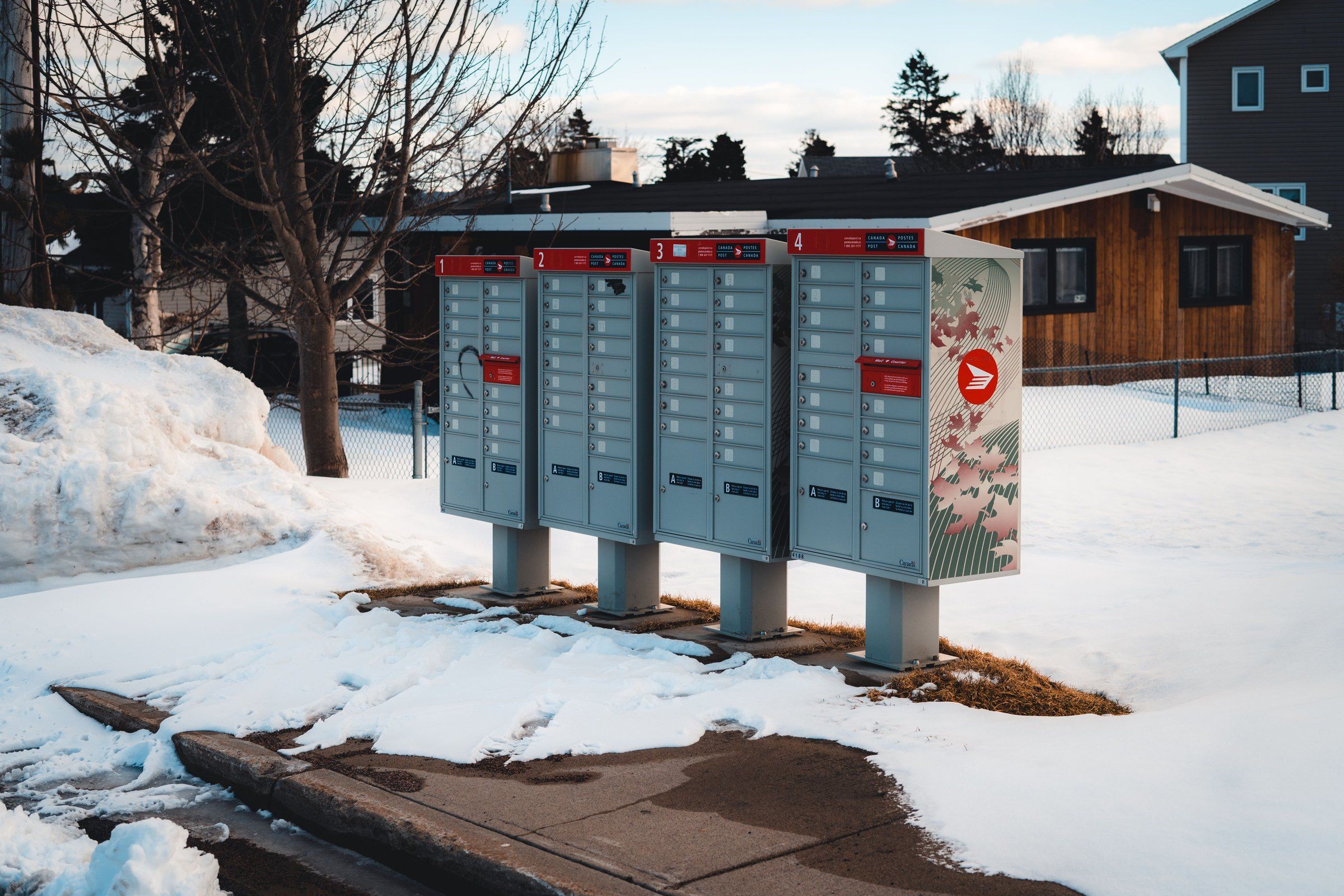
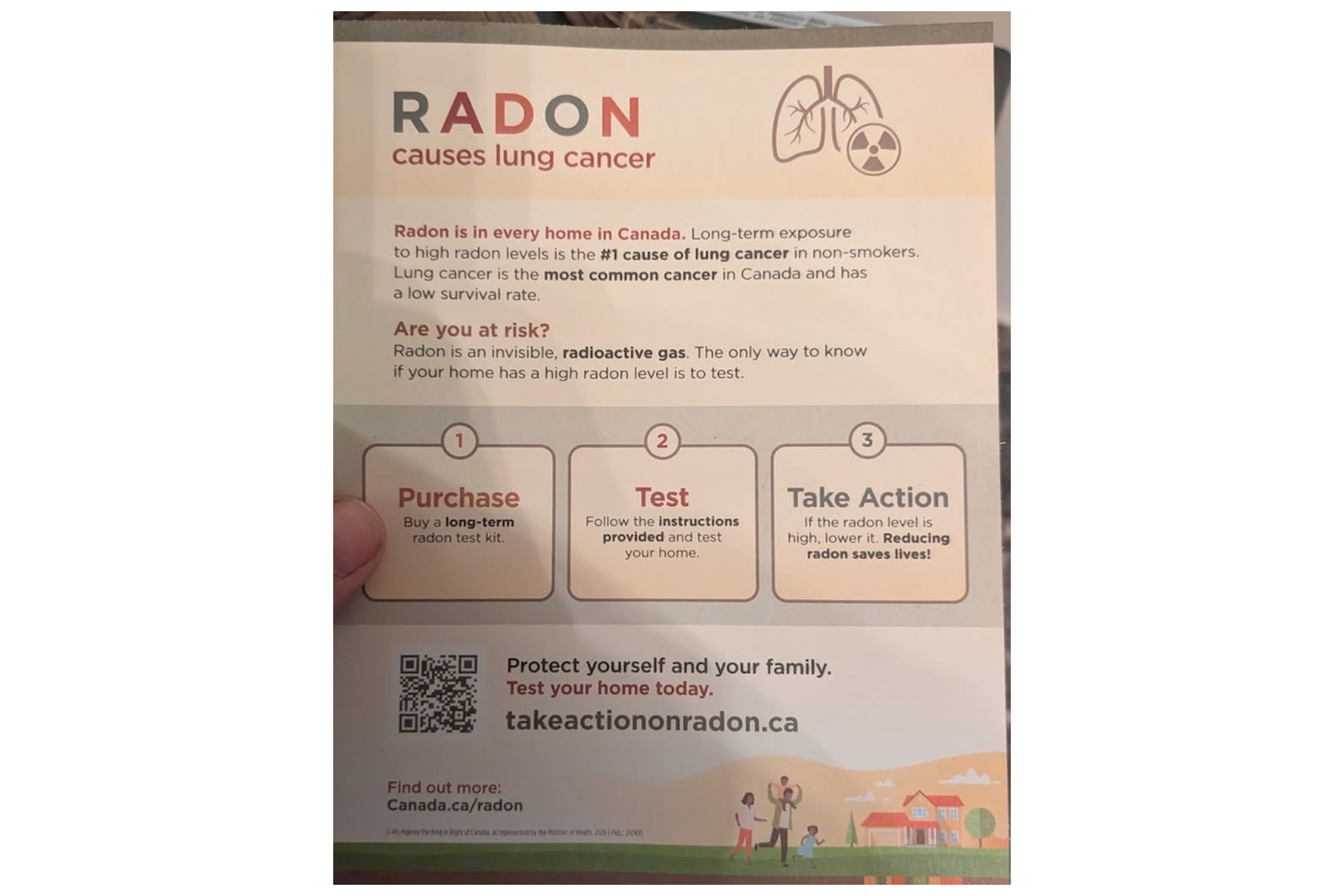
It’s a real postcard from Health Canada. Getting one doesn’t mean your home has high radon. Only a test can tell you that.
Health Canada’s own pages explain the card
Health Canada has a page for the card, with a copy you can download.
- Health Canada’s page for the radon postcard
- The postcard as a PDF, from Health Canada (958 KB)
- Canada.ca/radon, the address printed on the card
The card mailed to homes in 2026 prints takeactiononradon.ca. Health Canada’s downloadable PDF prints Test4radon.ca in the same spot. Both versions send you to Canada.ca/radon to find out more.
Health Canada hasn’t said how homes were chosen this year
Nothing published says how homes were chosen for this year’s cards, so no one can say why your home got one.
The only public account is a 2020 report. It says the postcard was distributed to Canadian households in areas where more than 14.49% of homes had tested above Canada’s radon guideline of 200 Bq/m³.
The card asks you to test your home, then lower a high level
The card lists three steps:
- Buy a long-term radon test kit.
- Follow the instructions provided and test your home.
- If the radon level is high, lower it.
Health Canada recommends testing for 3 to 12 months, with at least 91 days in the heating season.
Some libraries and health units lend radon detectors or give out free test kits, and you can look up your town to see if there’s one near you.